

A frameless shower door can gradually fall out of alignment after years of use or repeated opening and closing.
Typical symptoms include the glass dropping slightly, rubbing against the threshold or bottom seal, leaving an uneven gap beside the fixed panel, or failing to return to the correct closed position.
In many cases, the hinge itself is not broken. The glass may have shifted slightly inside the hinge clamp, a fixing may have loosened, or the hinge may simply need to be reset.
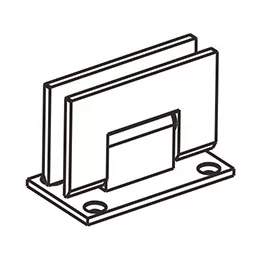
Before loosening any screws, identify the hinge type first. Wall-to-glass hinges, glass-to-glass hinges and pivot systems do not all use the same adjustment method.
Why Frameless Shower Doors Drop Over Time
Frameless shower doors rely on relatively heavy tempered glass.
As a rough reference:
- 8 mm glass weighs about 20 kg/m²
- 10 mm glass weighs about 25 kg/m²
- 12 mm glass weighs about 30 kg/m²
That weight is normally supported by two or three hinges.
The wider the door becomes, the more leverage is placed on the hinge system. Even when the total glass weight remains within the hinge rating, a wider door can create greater torque at the hinge.
Over time, small movements may occur between the glass, gasket and hinge plates.
Common signs include:
- The lower corner of the door starts touching the threshold or floor.
- The vertical gap between the door and fixed glass becomes uneven.
- The magnetic seal no longer meets evenly.
- The door stops before reaching its normal closed position.
- The door swings past its original resting position.
- The top and bottom hinge positions no longer appear consistent.
Before assuming the hinge is the problem, also check the wall fixing, fixed glass panel and surrounding hardware.
A loose wall anchor or movement in the fixed panel can sometimes look like a hinge adjustment problem.
Safety First: Support the Glass Before Adjustment
Tempered glass is very strong across its main surface, but its edges and corners are much more sensitive to impact.
If the edge of the glass drops onto a hard floor or metal threshold while the hinge screws are loose, the panel may fracture suddenly.
Before adjusting a shower door:
1. Support the door
Place suitable plastic shims, wooden blocks or rubber supports beneath the glass.
The supports should carry the weight of the door before the clamping screws are loosened.
Never allow a heavy glass door to hang freely from a partially loosened hinge.
2. Use two people for larger doors
For larger 10 mm or 12 mm doors, adjustment is normally safer with two people.
One person supports and controls the glass while the other works on the hinge.
3. Prepare the correct tools
Depending on the hinge design, you may need:
- Allen keys
- Screwdrivers
- Plastic shims
- Spirit level
- Tape measure
Avoid using impact drivers for hinge clamping screws unless the hinge manufacturer specifically allows them.
How to Adjust a Sagging Frameless Shower Door
If the door has dropped and is rubbing against the bottom seal, floor or threshold, first check whether the glass has slipped inside the hinge.
Step 1: Support the glass
Place shims underneath the door until the glass is fully supported.
Do this before loosening any hinge screws.
Step 2: Loosen the clamping screws slightly
Loosen the hinge plate screws just enough to allow the glass position to be corrected.
Do not remove them completely.
Step 3: Reposition the door
Carefully raise or reposition the glass until the vertical gap beside the fixed panel becomes even again.
The required gap depends on the shower enclosure design, magnetic seal and hardware configuration.
The important point is that the gap should remain consistent from top to bottom.
Step 4: Check the bottom clearance
Confirm that the bottom edge or seal clears the threshold or floor properly.
Also check that the top of the door remains aligned with the surrounding glass.
Step 5: Tighten evenly
Tighten the clamping screws gradually and evenly.
Do not fully tighten one screw while the others remain loose.
Even tightening helps distribute pressure correctly across the hinge plate and gasket.
Step 6: Test the complete opening movement
Remove the supports and slowly open and close the door through its intended operating range.
Check that:
- the door remains level,
- the glass does not contact surrounding surfaces,
- the closing gap remains even,
- the hinge movement feels smooth.
If the door immediately begins to move again, there is probably another cause.
Fixed and Adjustable Zero-Position Hinges
The glass position and the hinge closing position are two different adjustments.
Not every shower hinge allows the final resting angle to be changed.
Fixed factory zero-position hinges
Many self-closing shower hinges have a factory-set closing position.
The internal cam or spring mechanism is designed to return the door to that preset position.
If the glass is correctly aligned but the door no longer returns properly, the internal mechanism may be worn or damaged.
In this case, repositioning the glass will not repair the self-closing mechanism.
Adjustable zero-position hinges
Some shower hinges are designed so the installer can make a limited correction to the final resting angle.
This can be useful when:
- the wall is slightly out of plumb,
- the enclosure is not perfectly square,
- the magnetic seal needs final alignment,
- the closed position needs minor correction.
The actual adjustment method depends on the hinge design.
Some hinges use a set screw or adjustment screw. Other designs require the door position to be held while the internal mechanism is reset.
Never force an adjustment past the designed mechanical range.
What If the Glass Keeps Slipping?
If the door is realigned correctly but drops again after a short time, simply tightening the screws harder is usually not the solution.
Check the following areas.
Worn or contaminated gaskets
The gasket between the metal hinge and glass provides grip and protects the glass surface.
If the gasket becomes worn, compressed or contaminated with oil or other residue, the glass may slowly move inside the clamp.
Clean the contact surfaces and replace damaged gaskets where necessary.
Incorrect gasket thickness
Hinges designed to accept different glass thicknesses may require different gasket combinations.
For example, the gasket configuration used with 8 mm glass may not be the same as the one used with 10 mm or 12 mm glass.
Using the wrong gasket thickness can reduce effective clamping pressure.
Always use the gasket combination specified for the hinge and glass thickness.
Door width and load
Glass weight is not the only factor.
Door width also matters because a wider door creates more leverage on the hinge.
A wide glass door can place significantly more stress on the upper hinge than a narrower door.
If the door repeatedly drops, check:
- glass thickness,
- glass width,
- glass height,
- total door weight,
- number of hinges,
- hinge load rating.
In some cases, a heavier-duty hinge or an additional hinge is the correct solution.
Adjusting Pivot Shower Door Hinges
Pivot doors behave differently from conventional side-mounted hinges.
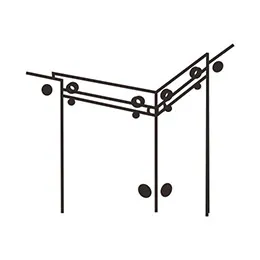
A pivot system normally depends on upper and lower pivot points remaining on the same vertical axis.
If either pivot moves out of alignment, the door may:
- bind while opening,
- show an uneven closing gap,
- lift slightly during movement,
- fail to close smoothly.
When checking a pivot door, compare the position of the upper and lower pivot points.
A small movement at the lower pivot can create a much more visible change at the top edge of the door.
After adjustment, always operate the door through its full intended range.
Do not judge the alignment only from the closed position.
Do Not Overtighten Shower Hinge Screws
Overtightening is a common mistake.
More torque does not automatically produce a more secure installation.
Excessive tightening can:
- damage the gasket,
- distort the hinge plate,
- damage screw threads,
- create unnecessary local stress on the glass.
The purpose of the screws is to create sufficient and even clamping pressure.
The condition and position of the gasket are just as important as screw tightness.
When manufacturer torque specifications are available, follow them.
When Should a Shower Door Hinge Be Replaced?
Not every hinge problem can be solved by adjustment.
Replacement should be considered if you find:
- visible cracks or deformation,
- damaged screw threads,
- worn internal cam components,
- loss of self-closing force,
- excessive hinge play,
- serious corrosion affecting movement,
- repeated slipping even after correct installation.
If a self-closing hinge has lost its internal spring or cam function, tightening the glass screws will not restore the original closing performance.
The internal hinge mechanism needs to be repaired or replaced.
Final Inspection After Adjustment
Once the adjustment is complete, operate the door several times.
Check the door when:
- fully closed,
- partly open,
- fully open within its intended range.
Make sure the glass does not contact:
- the fixed glass,
- wall,
- floor,
- threshold,
- handle,
- other hardware.
Also check the magnetic seal or closing seal along its full height.
A correctly adjusted frameless shower door should move smoothly and return consistently without visible lifting, dropping or sideways movement.
Frequently Asked Questions
Why does my frameless shower door keep dropping?
The most common causes are glass movement inside the hinge, worn or contaminated gaskets, incorrect gasket thickness, loose fixing screws, or a door that places too much load or leverage on the hinge.
If the door drops repeatedly, do not simply tighten the screws harder. Check the complete hinge and glass configuration.
Can all shower door hinges be adjusted?
No.
Most hinges allow the glass position to be corrected, but only certain models allow the closing or zero position to be adjusted.
A fixed-zero hinge cannot be converted into an adjustable-zero hinge by tightening or loosening normal mounting screws.
Why does my shower door rub against the bottom?
The glass may have slipped slightly downward inside the hinge, the hinge fixing may have moved, or the original bottom clearance may have been too small.
Support the door before loosening any hinge.
What is the correct torque for shower hinge screws?
There is no single torque value that applies to every shower hinge.
Follow the hinge manufacturer’s specification whenever one is provided.
In general, the screws should be tightened evenly enough to secure the glass without damaging the gasket or applying excessive local pressure.
Can I adjust a heavy glass shower door myself?
For large or heavy glass panels, two-person adjustment is strongly recommended.
Once the hinge screws are loosened, controlling the weight and position of the glass becomes much more difficult.
Selecting the Correct Shower Door Hinge
Correct adjustment starts with the correct hinge.
When selecting a hinge for a frameless shower door, consider:
- glass thickness,
- door width,
- door height,
- total glass weight,
- wall-to-glass or glass-to-glass installation,
- required opening direction,
- self-closing requirement,
- fixed or adjustable zero position.
MAXGO manufactures frameless shower door hinges for different glass and enclosure configurations.
If you need help checking a hinge for a particular project, send us the glass thickness, door dimensions, door weight and installation drawing. Our team can help confirm the appropriate hinge configuration before production.