
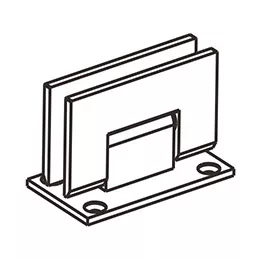

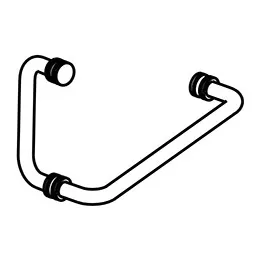
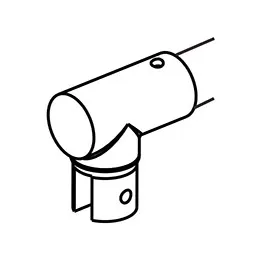
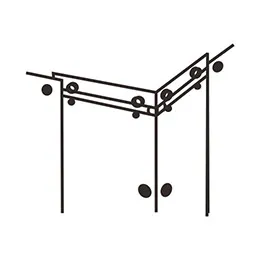

A shower hinge can keep the same design and specification while its quotation changes. For brass shower hardware manufactured in China and exported in US dollars, material costs and the RMB exchange rate are two important drivers. Understanding their combined effect helps buyers plan orders more realistically.
Monthly data through August 2026 | Prepared October 1, 2026
Why brass material costs matter
In Maxgo’s current brass-product cost structure, brass material accounts for approximately 60% of total cost. The remaining 40% covers machining, polishing, finishing, assembly, packaging and other expenses. This is a reference for our relevant products, rather than an industry-wide ratio or a fixed share for every model.
If the actual purchased material price rises by 10%, total product cost increases by approximately 6%, assuming unchanged material usage, production losses and other costs. A 20% material increase would raise total cost by approximately 12%. Material-price reductions work in the same way: the finished product does not become cheaper by the full percentage decline in material prices.
What the recent copper trend shows
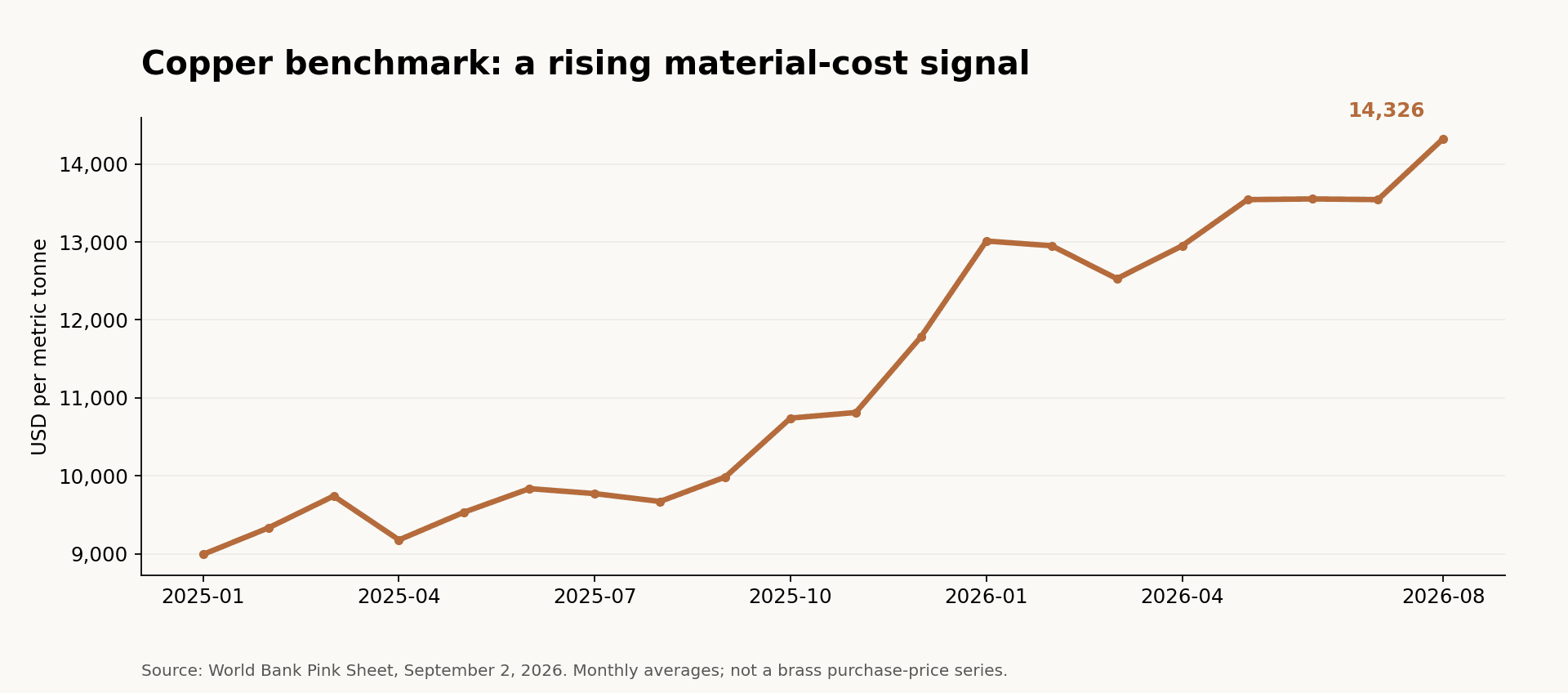
The World Bank copper benchmark increased from USD 9,670 per tonne in August 2025 to USD 14,326 in August 2026, a rise of approximately 48.1%. Between July and August 2026, it rose approximately 5.8%, from USD 13,543 to USD 14,326 per tonne.
This is a useful signal of material pressure, but it is not a brass purchase-price series. Brass contains copper and zinc, and Chinese purchase prices also reflect currency conversion, processing charges, material form and supplier terms. A 48.1% increase in the international copper benchmark does not establish the same increase in our brass purchase costs or finished hardware prices.
Why a stronger RMB can increase dollar quotations
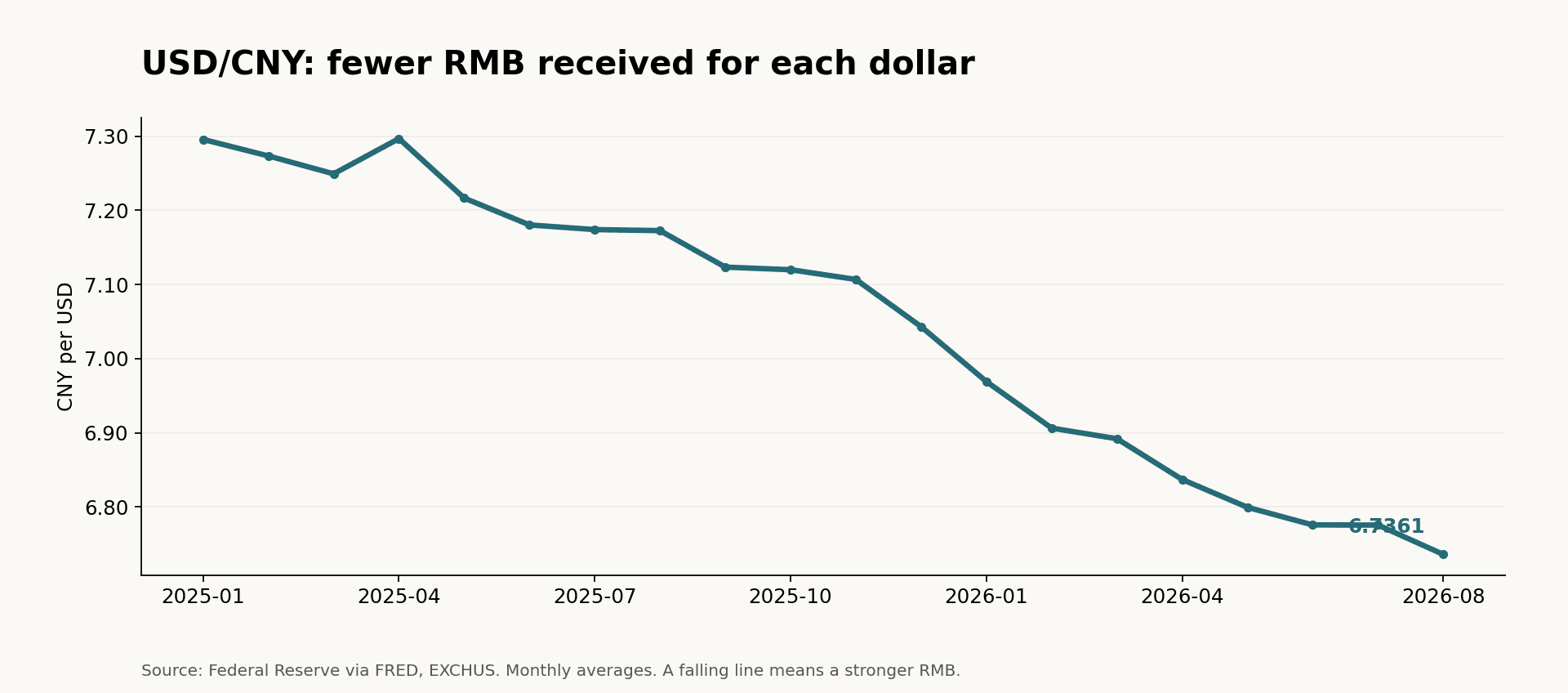
Chinese manufacturers pay labour, machining and many procurement expenses in RMB. When each US dollar converts into fewer RMB, an unchanged RMB cost becomes more expensive in dollar terms.
A product costing RMB 72 has a dollar-equivalent cost of USD 10 at an exchange rate of 7.20 CNY per USD. At 7.00, the same cost becomes approximately USD 10.29—an increase of about 2.9%, even without a material-price change.
The monthly USD/CNY rate declined from 7.1727 in August 2025 to 6.7361 in August 2026. An unchanged RMB amount therefore increased approximately 6.5% when expressed in dollars. Actual settlement rates depend on the bank, payment date and any currency hedging.
How the two effects combine
Consider an illustrative baseline cost of RMB 100: RMB 60 for material and RMB 40 for other costs, at an exchange rate of 7.20. If the actual RMB material purchase price rises 10%, total cost becomes RMB 106. If the exchange rate also falls to 7.00, dollar-equivalent cost increases from USD 13.89 to USD 15.14, or approximately 9.0%. Keeping the same profit margin would create similar upward pressure on the dollar quotation.
| Scenario | Material price change | New CNY/USD rate | USD cost change |
|---|---|---|---|
| Material rises; FX unchanged | +10% | 7.20 | +6.0% |
| Material rises; RMB strengthens | +10% | 7.00 | +9.0% |
| Material rises; RMB weakens | +10% | 7.40 | +3.1% |
| Material falls; RMB strengthens | −10% | 7.00 | −3.3% |
These are sensitivity scenarios, not market forecasts or a Maxgo price-change announcement. Material changes refer to actual RMB procurement prices; other costs, material usage and profit margin are held constant. If material is priced in dollars, its currency effect must be reflected in procurement cost without double counting.
What could happen to shower hardware prices next?
The observed copper increase and stronger RMB point to upward pressure on dollar quotations for brass shower hardware. This is an assessment of cost direction, rather than a prediction that every product will rise immediately or by a specific percentage.
If actual brass purchase prices continue rising while the RMB remains strong, new-order quotations are more likely to increase. If material prices ease, or a weaker RMB offsets part of the cost increase, quotations may stabilise or have room to decline. When the two move in opposite directions, their combined effect matters most.
Inventory, locked material prices, order quantities, machining complexity and production schedules also affect how quickly costs reach quotations. Existing material stock can delay an adjustment; replenishment may bring new costs into later orders.
How buyers can plan with less uncertainty
For confirmed projects, agree on the model, quantity, finish and delivery schedule early, and clarify quotation validity and price-lock conditions. For repeat standard products, rolling forecasts and scheduled orders can support material purchasing and production planning. Any price commitment should be defined in the supplier agreement.
Compare quotations using the same material grade, product weight, glass application, finish and packaging requirements. Stainless steel and zinc-alloy products have different cost drivers, so copper movements alone cannot explain all shower hardware prices.
Monitoring copper and exchange rates is useful; checking actual procurement costs with the supplier makes that information actionable. Together, these steps support more reliable purchasing budgets and delivery planning.
Explore our shower door hinges and shower glass clamps and brackets to compare suitable hardware for your project.